He was beheaded
Improve consistency of finished product quality
Remove head and tail defects and edge irregularities, ensuring straight coil edges and width consistency; downstream processes such as slitting, coating, and heat treatment become more stable.
Improve material utilization and yield
Reduce edge scrap and the need for secondary processing; increase yield, and reduce rework and downtime.
Enhance automation and process controllability
Typically linked with online inspection, closed-loop control, and automated tooling systems, reducing manual intervention and helping stabilize production rhythm.
Lower maintenance costs and equipment wear
Standardized edge processing reduces localized tool wear and fixture stress, extending equipment life.
Improve surface and coating quality
Removing edge defects leads to more uniform coating/galvanizing quality, reducing coating fluctuations and quality risk.
Increase line flexibility and responsiveness
Can quickly adapt to different widths and specifications, improving efficiency for small-batch, multi-product production.
On-site safety and environmental hygiene optimization
More standardized edge trimming, centralized management of edge scrap, reducing debris and safety hazards on site.
Facilitate quality traceability and data analysis
End-edge processing data can be used to generate quality records at coil/batch level, improving traceability and continuous improvement capability.
Implementation considerations (brief)
Equipment and processes
Select efficient head-cutting/edge-trimming equipment, centering and tension control systems, online edge detection and positioning devices.
Establish clear edge width tolerances, head/tail residue lengths, cutting/shearing speeds, and tooling life strategy.
Quality and maintenance
Establish grading of edge defects and traceable inspection processes; regularly replace tools and calibrate centering equipment.
Product positioning and applicable scope
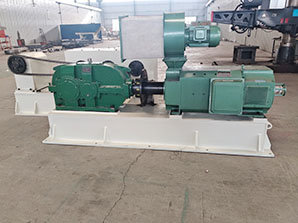
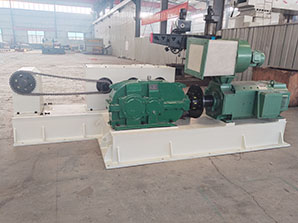
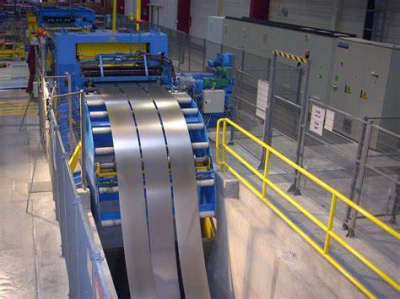
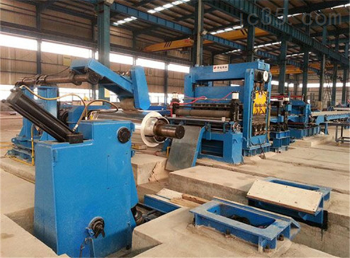
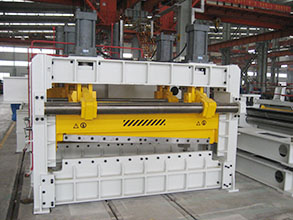
Product name: Head-cut/Edge-trim Unit for Coil Production Line
Applicable range: Used for head-cutting and edge trimming on steel coil lines, improving edge quality, material utilization, and the stability of downstream processes.
Compatibility: Seamlessly integrates with common coil lines, centering systems, tension controllers, and online inspection systems, supporting steel coils of different widths and specifications.
Core functions
Head-cutting (head removal) function: Precisely cuts off the coil head to remove defect zones, ensuring smooth downstream processing.
Edge trimming function: Removes edge defects and trims edges to straight lines and consistent widths.
Online detection and positioning: Real-time detection of edge position, width, and centering error; closed-loop control of tool feed and cut position.
Automatic tooling and centering adjustment: Auto-centering, tool life management, rapid tool replacement and re-positioning.
Tension and drive coordination: Works with upstream and downstream equipment to maintain stable tension, ensuring stable head-cutting/edge-trimming processes.
Data collection and traceability: Edge-processing parameters, tool status, and process data traceable to individual coils or batches.
Structure and key components (typical composition)
Head-cutting unit
Tool/knife system, axial positioning mechanism, cutting servo drive, tension coupling mechanism
Edge-trimming unit
Shearing/trimming tools, centering device, tool-clamping mechanism, tool-life monitoring
Online detection and positioning system
Edge-detection sensors, vision/laser positioning components, positioning fixtures, control interface
Centering and tension control system
High-precision centering sensors, tension drive, feedback loop, servo amplifier
Mechanical transmission and bearing
Frame, guides, linear slides, vibration-damping supports, lubrication and sealing system
Hydraulic/Pneumatic system
Hydraulic/pneumatic cylinders, valve group, pressure regulation and safety valve
Control and electrical system
PLC/motion controller, servo drives, HMI, fieldbus, sensor interfaces, fault self-diagnosis
Safety and protection
Protective covers, emergency stop button, light curtains/photocells, interlock protection, chip and scrap collection
In/out and clamping mechanism
Clamping, cut-off/lead-in rollers, guiding devices, coil/fabric guiding structure
Online maintenance and service interface
Remote diagnostic port, maintenance interfaces, spare-parts location labeling
Main features and advantages
High-precision centering and stable tension control to ensure downstream process stability after head-cutting/edge-trimming
Automated tool management and rapid replacement to shorten downtime
Unified safety protection and shielding design to improve on-site safety
Modular design, easy to retrofit and extend with existing lines
Quality and compliance
Key components use wear-resistant materials and heat treatment to ensure long-term stability
Data recording (coil number, batch, edge parameters, tool life, etc.)
Meets industry standards and certifications (mechanical safety, electrical safety, noise control, etc., per regional requirements)
Installation, commissioning and training
On-site installation, system commissioning, and process parameter setup
Provide operator training, daily maintenance and fault-diagnosis training
If you’d like, I can tailor this into a formal product spec sheet or a bilingual (English/Chinese) version for meetings or proposals.