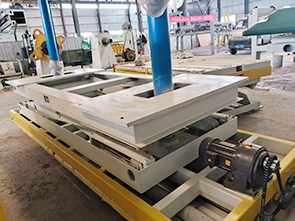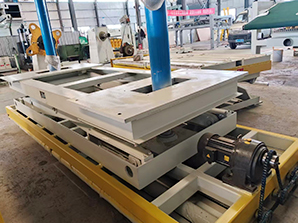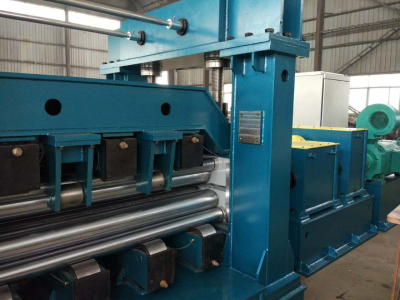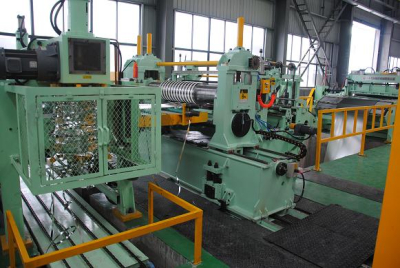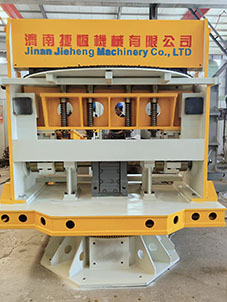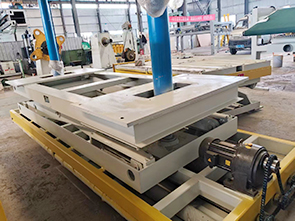
lifting platform
Increase production efficiency
Fast lifting and lowering, precise positioning, shortening changeovers and roll-changing waiting times, and improving line-speed synchronization.
Significant safety improvements
Multi-point limit switches, overload protection, emergency stop, anti-fall and pinch-point protection to reduce operation risks.
High load capacity and stability
Considering reel weight and line impact, improve load stability and reduce vibration effects on downstream processes.
Precise positioning and repeatability
High repeatable positioning accuracy, ensuring core alignment, clamping and drive linkage reliability, reducing rework.
Modular and easy to integrate
Modular design for seamless integration with existing unwinding line control systems, PLC/SCADA, and tension control units.
Low maintenance and high durability
Uses wear-resistant materials, sealed lubrication, and simplified drive design, extending maintenance intervals and lowering failure rates.
Energy efficiency and cost benefits
Efficient drive (servo or optimized hydraulic configuration), reducing energy consumption and O&M costs, lowering total cost of ownership.
Safety and standards compliance
Complies with industry safety standards (ISO/CE/EN, etc.) and provides corresponding safety certifications and test reports.
Adaptability and customization flexibility
Customizable to reel diameter, weight range, stroke, and working environment; compatible with various unwinding line configurations and expansion needs.
Data and remote support
Includes status monitoring, remote diagnostics, and maintenance reminders to enable predictive maintenance and uptime optimization.
Product Positioning and Applications
Positioning: A lifting module for unwinding lines, handling reel lifting, alignment, clamping linkage, etc., to improve stability and efficiency of unwinding, alignment, and tension control.
Suitable scenarios: Mid- to large-scale unwinding lines and production lines with varying reel diameters and weights; environments requiring seamless integration with tension control, PLC/SCADA, and other systems.
Key Specifications (example ranges; actual models may vary)
elevating platform Maximum load (lifting capacity): approximately 500 kg to 10,000 kg (graded models available)
Stroke (lifting travel): 200 mm to 2,000 mm
Speed (up/down): 0.05 m/s to 0.6 m/s (details customized)
Repeatability: ±0.02 mm to ±0.10 mm
Drive options: servo motor drive, hydraulic system, or servo-hydraulic hybrid
Power supply and control voltage: DC/AC supply; common options include 220 V/380 V (three-phase) or control power for VFD/servo drives
Safety protection levels: IP54/IP65 (depending on environment), emergency stop, limit switches, anti-fall and anti-pinch design
Controls interface: Ethernet/IP/Modbus/TCP, Profinet, CANopen, PLC/SCADA compatible
Environmental conditions: operating temperature -10°C to 50°C (high/low temperature versions available), humidity and dust levels customized per application
Standards and certifications: complies with relevant ISO/CE/EN safety and quality standards, with test reports and safety certifications
Form factor and installation: modular structure, easy docking with existing unwinding line frame, guide rails, tension units, sensors, and fixtures
Structural Composition
Main frame: high-strength steel or aluminum alloy welded or cast structure for rigidity and fatigue resistance
Lifting unit: screw + guide rails, linear module, or ball screw with guide rail combination to ensure smooth lifting and positioning
Drive and transmission: servo motor and/or hydraulic cylinder, paired with precise gears, pulleys, or screw drive
Safety devices: multi-point limit switches, overload protection, emergency stop, anti-fall and anti-pinch mechanisms
Control and sensing: position sensors, force/tension sensors, encoders, temperature sensors, control cabinet and HMI
Protection and accessories: safety enclosure, guard nets, dust sealing and lubrication seals, mounting bolts and connectors
Interfaces and cables: organized cable routing, waterproof connectors, separation of signal and power for easy maintenance
Drive and Control System
Drive selection: servo-based primary drive, with hydraulic assist to achieve fast lift and heavy-duty operation; custom options for pure hydraulic or pure servo systems
Control system: built-in or external control cabinet, supports local manual/automatic control and data exchange with PLC/SCADA
Sensing and safety: alignment sensing, limit switches, emergency stop, overload protection, anti-fall, anti-pinch features
Communication and integration: supports common industrial protocols, easy integration with tension control units, tension sensors, and closed-loop tension control
Materials, Durability and Maintenance
Material selection: wear-resistant, corrosion-resistant materials; key components with dust and water sealing
Lubrication and maintenance: sealed lubrication system or maintainable lubrication scheme; longer service intervals and lower fault rates
Maintenance highlights: easy-to-disassemble guides and lifting units, readily available spare parts, on-site maintenance and remote diagnostic support
Safety and Compliance
Safety design: complies with industry safety standards; provides safety certifications, test reports, and user manuals
Protection and compliance: protective covers, emergency stop, limit protection, anti-pinch design to reduce operator risk
Installation, Commissioning and After-sales
Installation requirements: interfaces with existing unwinding line control systems, tension units, and fixtures; provide assembly drawings and installation guides
Commissioning and training: vendor can provide on-site or remote commissioning, and training on operation and maintenance
After-sales service: warranty, spare parts supply, remote diagnostics, on-site maintenance services, and upgrade plans
If you’d like, I can tailor this further to specific models or provide a concise one-page specifications sheet for procurement.